
Giving birth brings major physical changes. Even if you exercised regularly before pregnancy, your body needs time to recover before returning to your usual workouts.
Postpartum Pilates can help you rebuild core strength, improve movement control and regain strength after childbirth. The key is choosing exercises suited to your recovery and progressing at the right pace.
At LIVE Pilates, we believe the right exercise isn’t always the hardest exercise. It’s the one that’s right for you.
Disclaimer: This article is for general educational purposes and is not a substitute for individual medical advice. Consult your healthcare provider before starting or progressing exercise if you experienced birth complications or have ongoing symptoms or concerns about your recovery.
How Does Your Body Change After Giving Birth?
Pregnancy stretches your abdominal muscles, changes your posture and places increased demands on your pelvic floor. These changes can continue to affect you after childbirth.
You may notice:
- Reduced core control: You may find it harder to stabilise your trunk or perform abdominal exercises that once felt easy.
- Pelvic floor symptoms: Pregnancy and childbirth can affect pelvic floor strength and coordination, sometimes causing urinary leakage or pelvic heaviness.
- Back, hip and knee discomfort: Changes in movement patterns and the demands of caring for a newborn may contribute to discomfort.
- Existing injuries becoming more noticeable: Pregnancy-related changes in posture and physical demands may aggravate existing aches or injuries.
Some symptoms begin during pregnancy and continue after birth. Every woman’s recovery is different, so your exercise programme should reflect your individual needs.
When Can I Start Exercising After Giving Birth?
There is no single timeline that suits everyone. The following is a general guide for recovery after an uncomplicated vaginal birth. If you had a caesarean section, significant tearing or other complications, follow your healthcare provider’s advice.
First few days to 2 weeks
- Prioritise rest, with gentle walking and relaxed breathing as you feel ready.
- Avoid strenuous workouts and heavy lifting.
Weeks 3 to 6
- Gradually increase walking and introduce gentle mobility exercises as tolerated.
- Ease off if you experience pain, increased bleeding or pelvic heaviness.
Around 6 to 8 weeks
- Discuss progressing to structured exercise with your healthcare provider.
- Depending on your recovery, you may introduce light resistance training and gentle core exercises.
Around 12 weeks and beyond
- Gradually build towards heavier strength training and higher-impact activities if your recovery allows.
- Do not rely on the calendar alone to determine readiness.
If you experience urinary leakage, pelvic heaviness or pain during exercise, or symptoms persist or worsen afterwards, seek advice before progressing. For further guidance, see Singapore Physical Activity Guidelines (SPAG) on pregnant and postpartum women
Why Should You Avoid Exercising Too Hard Too Soon?
Returning to strenuous exercise too quickly may aggravate symptoms while your body is still recovering. Watch for:
- Urinary leakage.
- Pelvic heaviness, dragging or pressure.
- Abdominal doming during exercise.
- Abdominal, pelvic, back or hip pain.
- Bleeding that increases after activity.
Postpartum exercise guidance published in the British Journal of Sports Medicine recommends a gradual return to running, increasing duration and intensity progressively while monitoring symptoms, fatigue and recovery.
These symptoms do not automatically mean you have caused damage, but they may indicate that an exercise needs to be modified or your recovery needs further assessment.
Postpartum Pilates offers a way to rebuild strength gradually, starting with appropriate exercises and progressing as your body allows.
How Can Pilates Help Your Body After Giving Birth?
1. Rebuild Your Core Strength
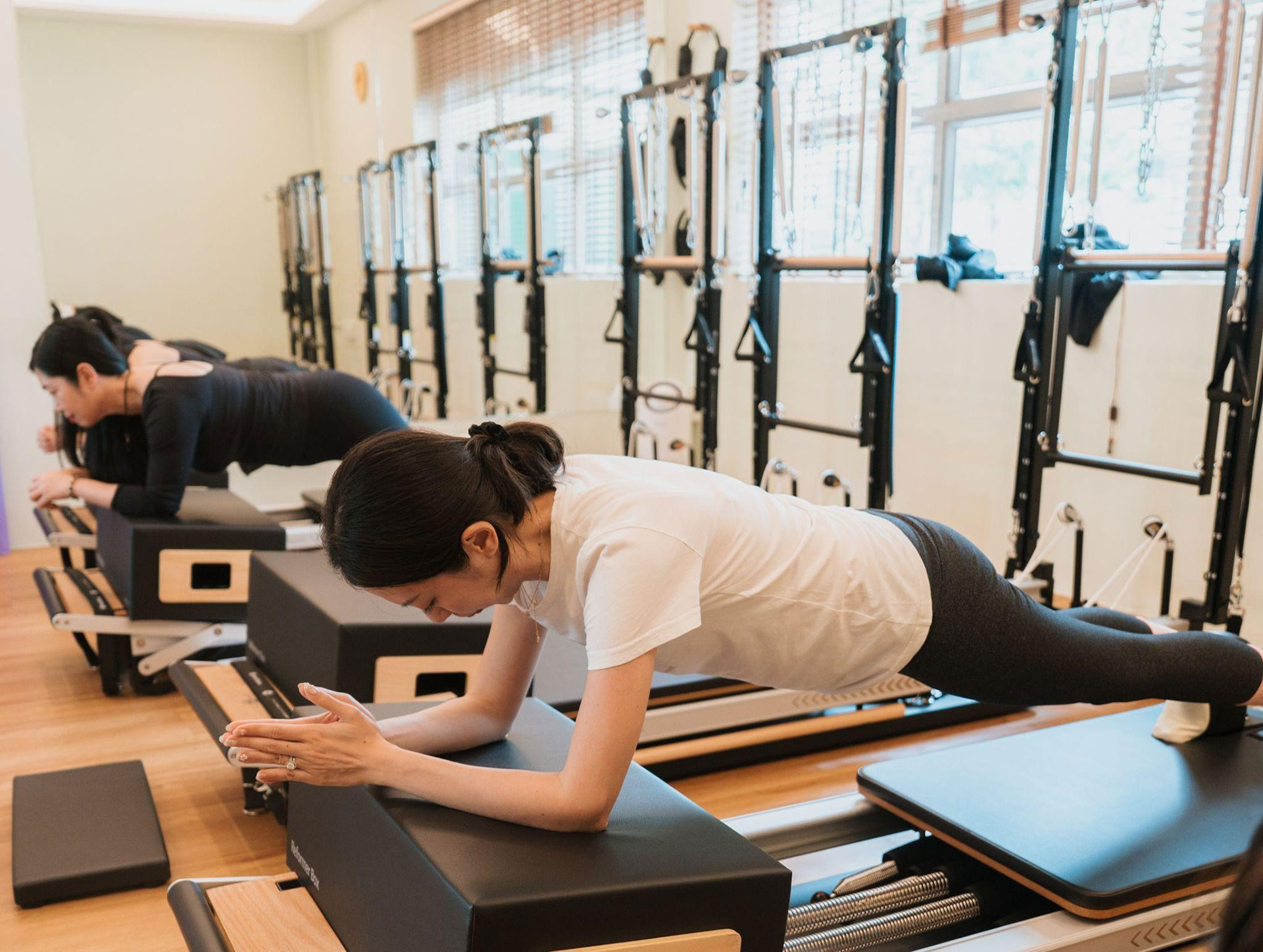
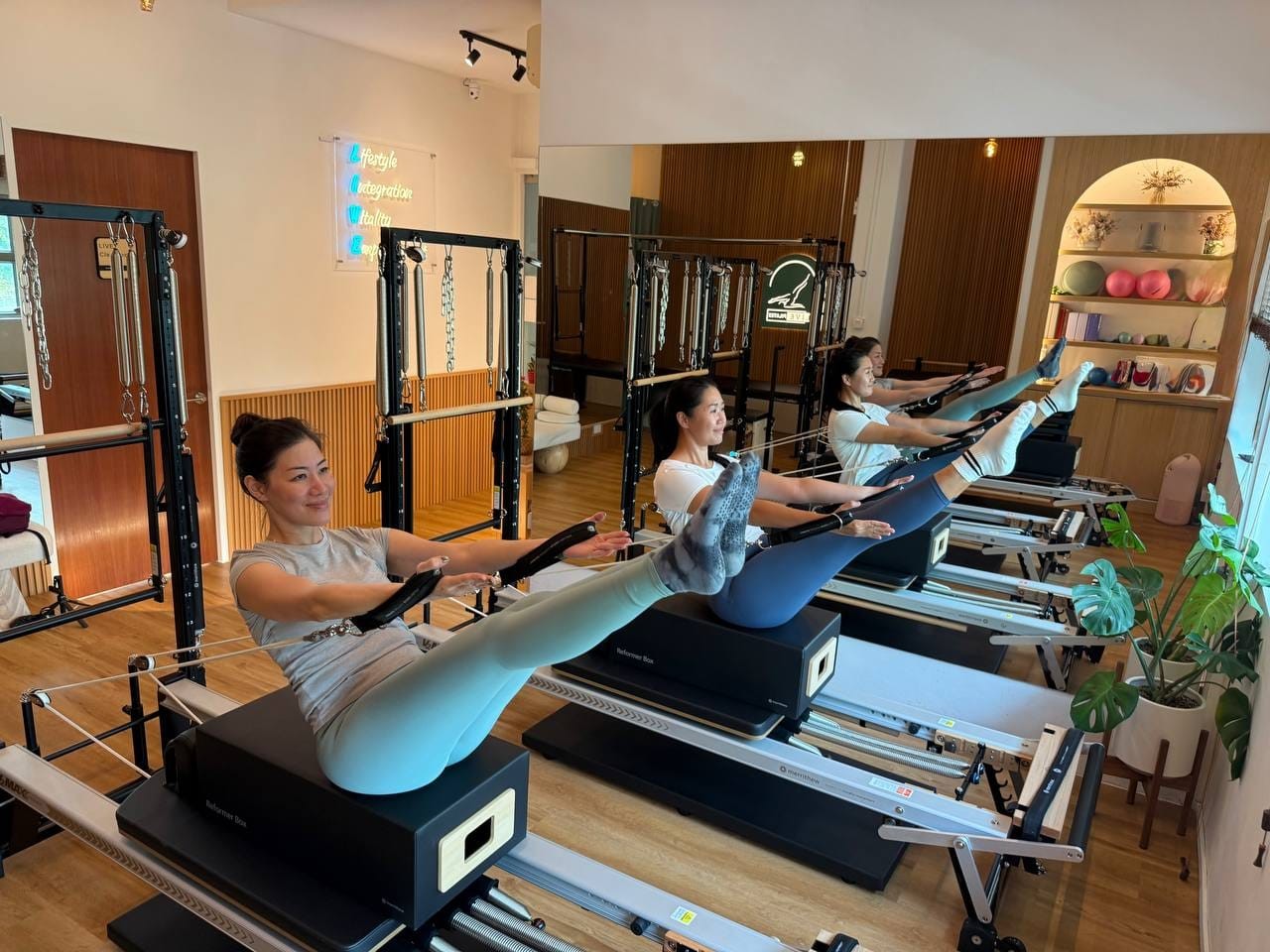
Postpartum Pilates uses controlled movements and breathing exercises to help rebuild abdominal strength, endurance and trunk stability.
Reconnect with your deep core
Breathing exercises help you coordinate your diaphragm, transversus abdominis (TA) and pelvic floor muscles with the muscles that support your spine. Pilates incorporates breathing and controlled movement to help you practise this coordination.
Progressively strengthen your abdominal muscles
The rectus abdominis, obliques and transversus abdominis work together to support your trunk. Your instructor can adjust the range of movement, resistance and level of support to suit your ability.
For example, you might start with heel slides or toe taps while lying on your back, then progress to more challenging exercises as your control improves.
2. Support Recovery From Diastasis Recti
Diastasis Recti occurs when the connective tissue between the two sides of the rectus abdominis stretches and widens, causing the muscles to sit further apart. This is common during pregnancy and may persist after childbirth.
Postnatal Pilates can help rebuild abdominal strength and control through exercises suited to your current ability. You might begin with heel slides before progressing to more challenging abdominal exercises.
A trained instructor can monitor your movement, observe abdominal doming and modify exercises when needed. Rather than pushing through intense abdominal work, the aim is to find the right level of challenge and progress safely.
*Note: Exercise-based therapies, including Pilates, offer a conservative approach to managing diastasis recti by improving abdominal strength and function. However, they may not fully close the gap, and results vary from person to person.
For examples of gentle exercises, see our article on postpartum recovery.
3. Strengthen Your Back, Hips and Shoulders
Your back, hips and legs are just as important as your core when it comes to supporting your body and controlling movement.
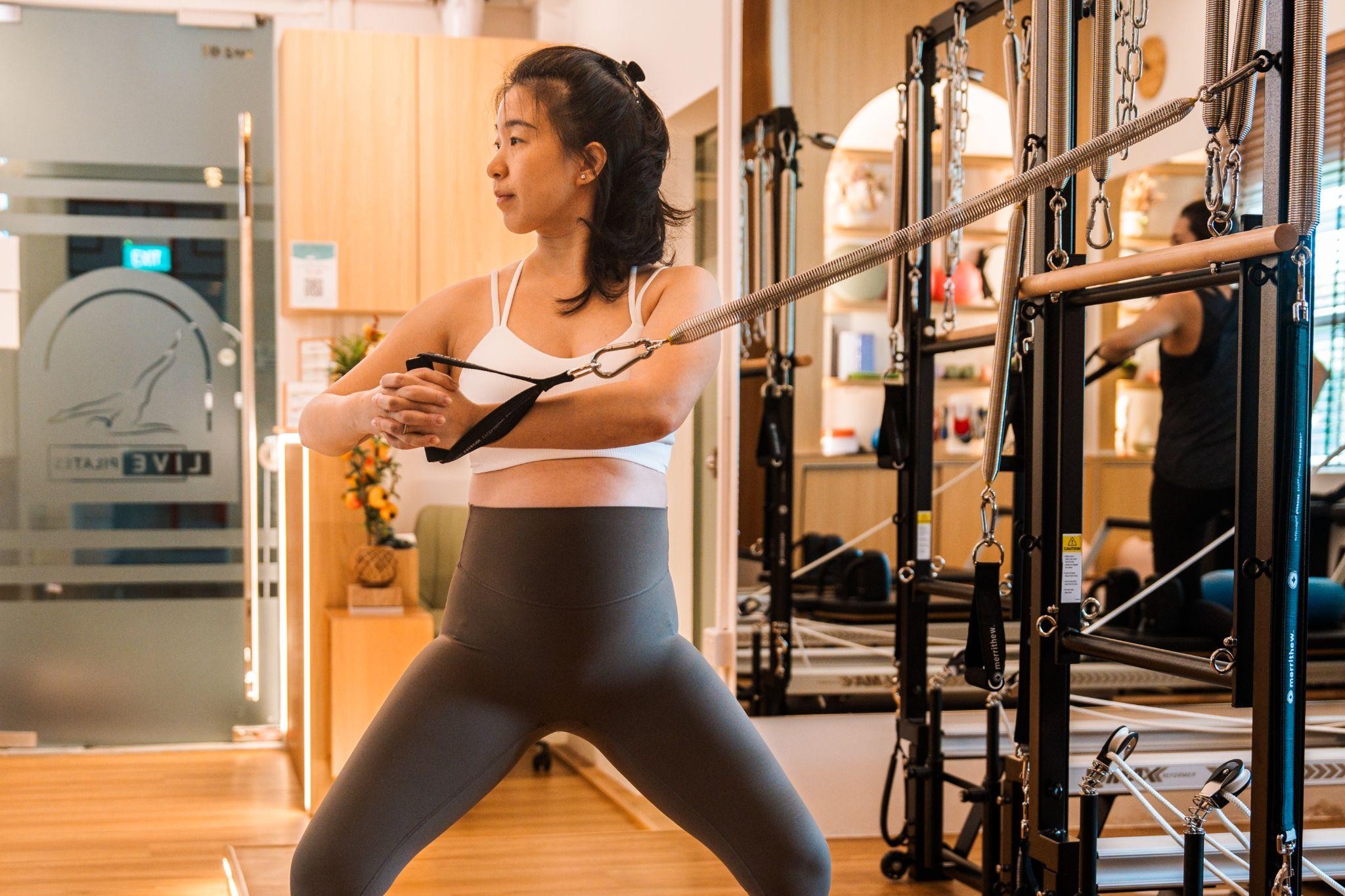
A well-rounded postpartum Pilates programme can strengthen these muscle groups and improve spinal mobility. This helps prepare your body for everyday demands, from walking and lifting to carrying your baby.
Frequent carrying and feeding can also leave your back and shoulders feeling stiff or uncomfortable. Pilates combines mobility work with strengthening exercises for your back, shoulders and arms to help you manage these daily tasks with greater comfort and control.
Start Your Postpartum Recovery With the Right Support
Recovering after childbirth takes time, and you don’t have to navigate your return to exercise alone.
At LIVE Pilates, we offer private postpartum Pilates sessions with individualised attention. Your instructor can tailor exercises to your current strength, movement and recovery needs, progressing your programme as you become ready for more.
Whether you want to rebuild core strength, work on diastasis recti or feel stronger in everyday activities, we’ll help you find an appropriate starting point.
Ready to return to exercise after giving birth? Whatsapp LIVE Pilates to find out how our private Pilates sessions can support your postpartum recovery.
Read More