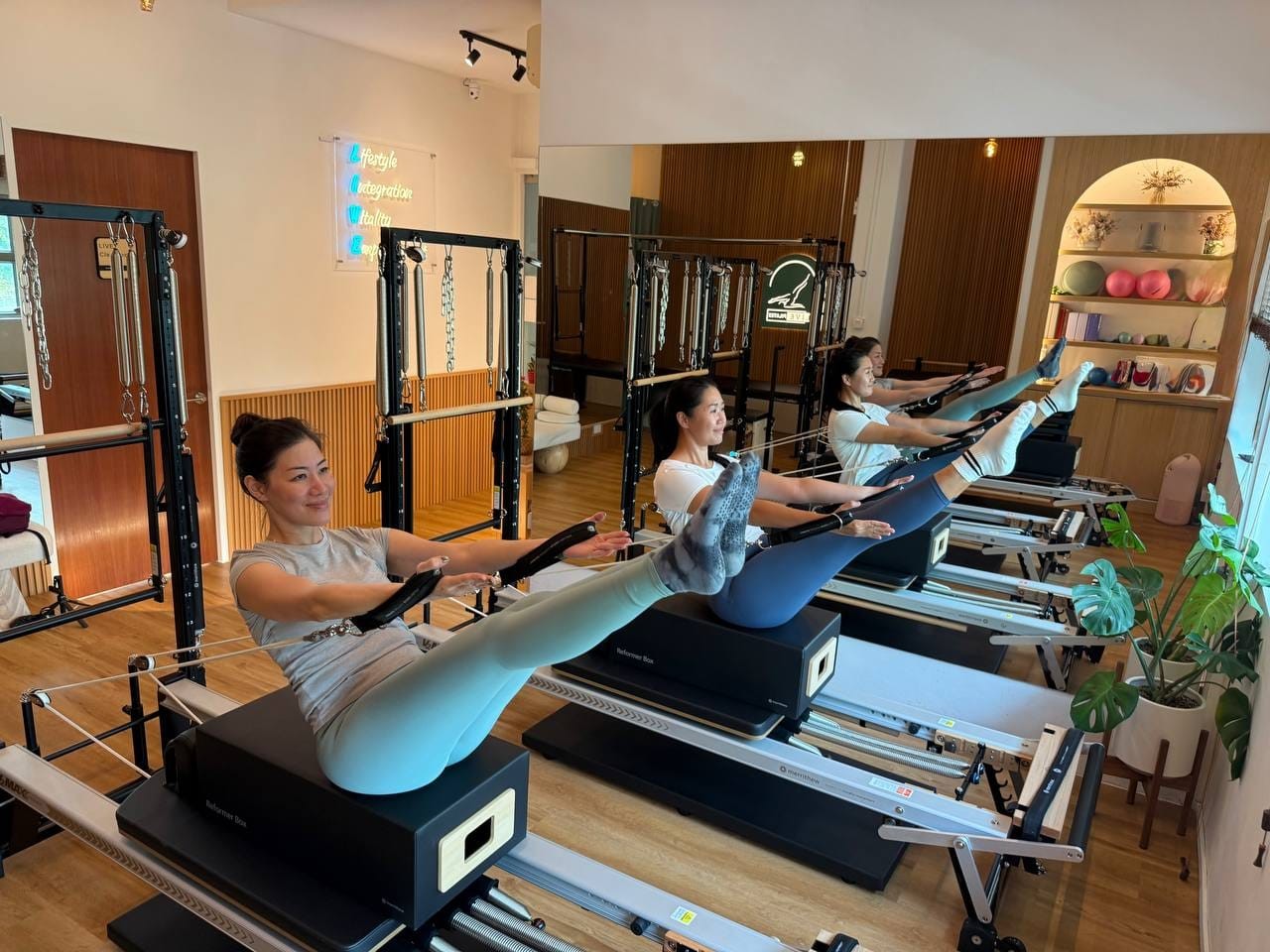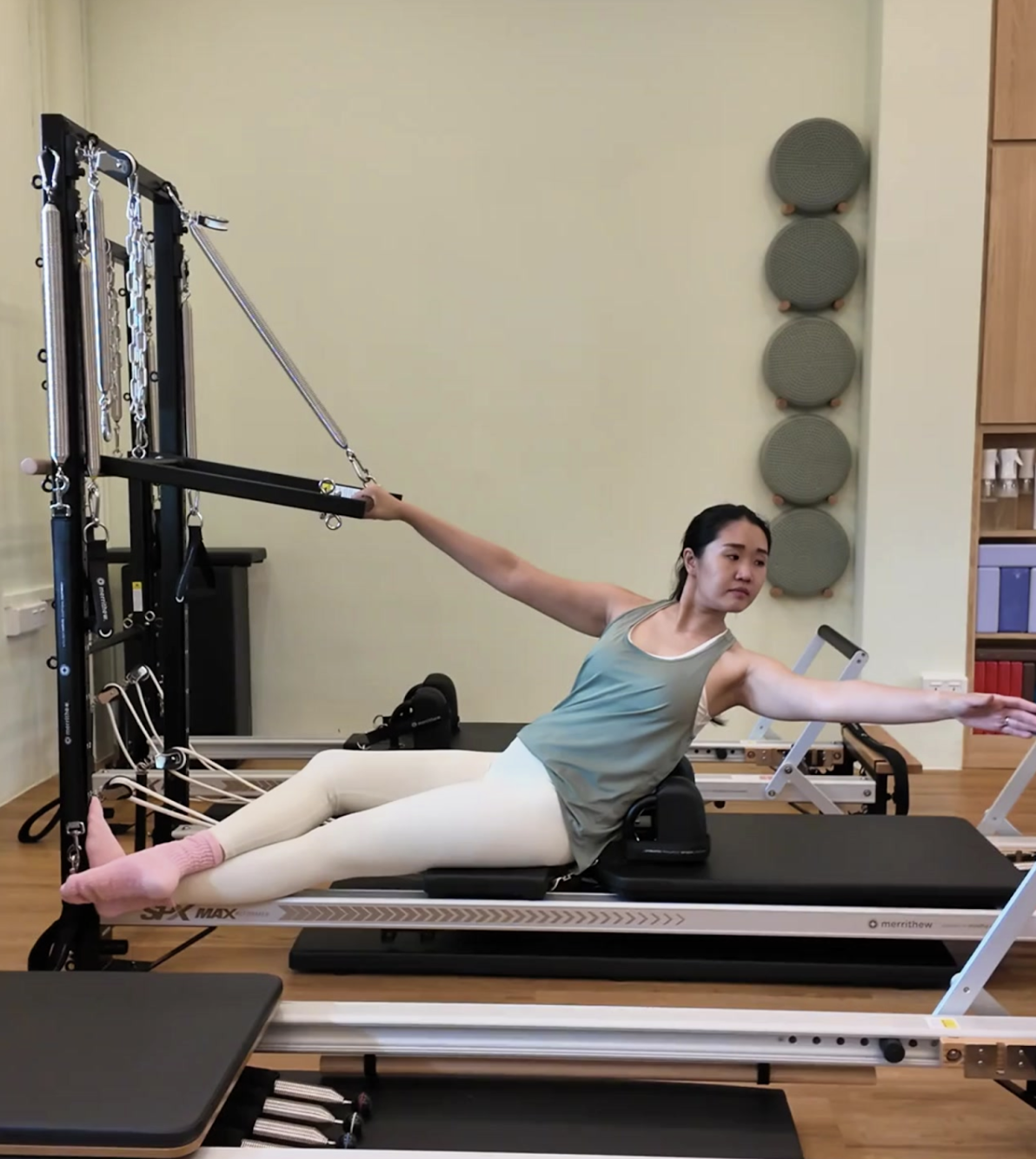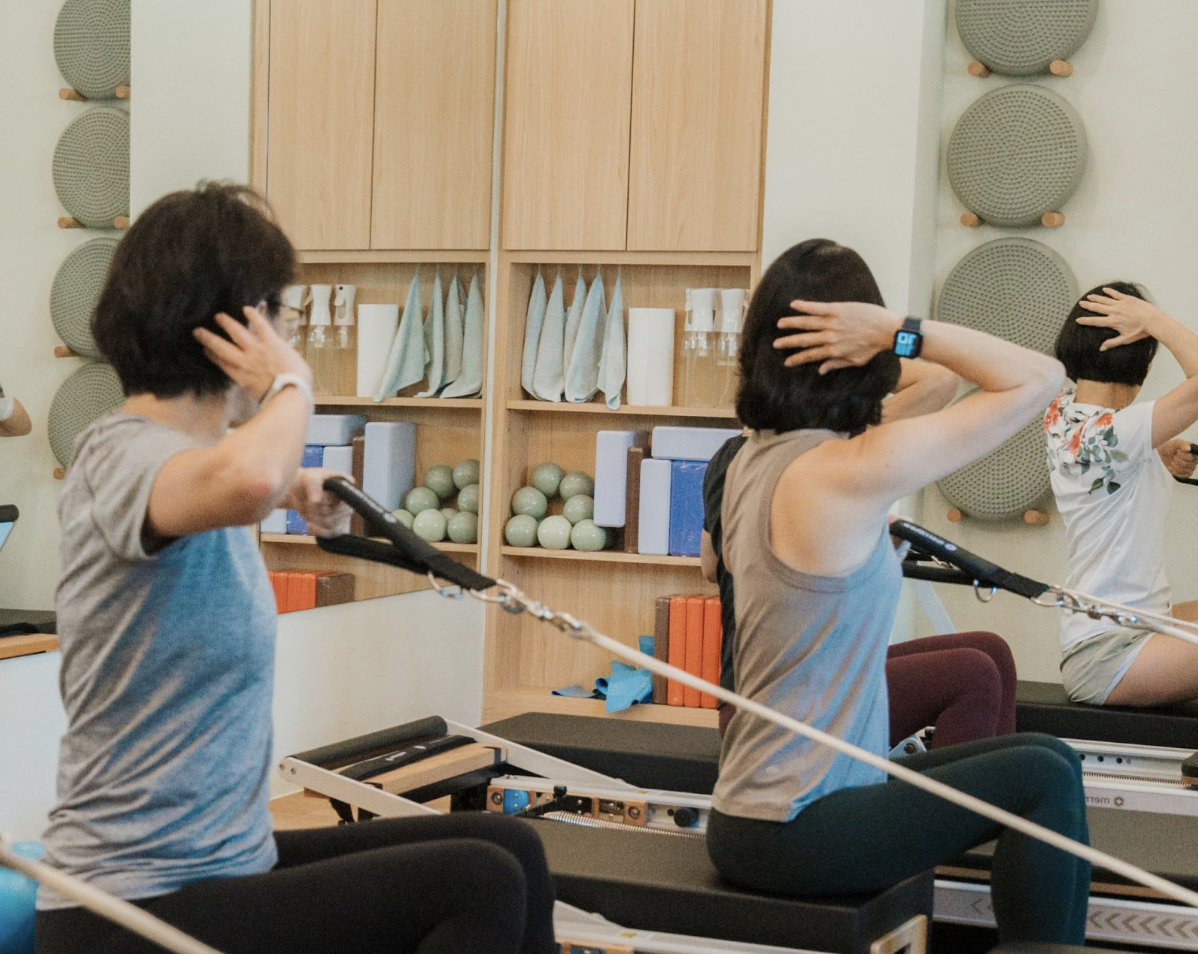

Yes! Equipment Pilates, including Reformer Pilates, Cadillac, Pilates Chair and barrels, can be safe during pregnancy with appropriate exercise modifications. The key is having an instructor who understands pregnancy and knows how to choose the right exercises for your changing body.
Pilates is a low-impact way to maintain strength, mobility and fitness during pregnancy. However, your exercises, resistance and intensity may need to change as your pregnancy progrsses.
At LIVE Pilates, our prenatal Pilates sessions in Singapore are tailored to each client’s needs, helping you stay active and move comfortably throughout pregnancy.
Before starting or continuing an exercise programme, discuss your individual circumstances with your healthcare professional, particularly if you have pregnancy complications or medical restrictions.
First Trimester: Adjust the Intensity
Congratulations on your pregnancy! Although your bump may not be showing yet, your body is already going through significant changes. Nausea and fatigue are common, and your energy levels may fluctuate from day to day.
If you were already practising Pilates regularly, you can generally continue many familiar exercises during an uncomplicated pregnancy, provided you feel well and have no medical restrictions. If you’re new to Pilates, you can also begin with gentle, appropriate exercises.
What to focus on:
- Pelvic floor awareness: Learn to contract and relax the pelvic floor muscles in coordination with your breathing.
- Deep core activation: Develop coordination between your breathing, deep abdominal muscles and pelvic floor to support your changing body.
- Gentle strengthening: Maintain strength in your arms, legs, hips and back without overexertion.
- Spinal mobility: Keep your spine moving comfortably through gentle, controlled movements.
Typical modifications:
- Adjust spring resistance and exercise intensity according to your energy levels.
- Take more rest breaks and shorten the session if you tire easily.
- Modify positions or movements that trigger nausea. For example, if lying face-up makes you feel unwell, try side-lying, seated or standing exercises instead.
- Stay hydrated and avoid overheating.
During the first trimester, many familiar Pilates positions, including lying on your back, may still be comfortable. However, exercises should always be adjusted according to your symptoms and individual circumstances.
Second Trimester: Adapt to Your Growing Bump
Many women find that their energy returns during the second trimester. This can be a good time to work on strength, provided the resistance and intensity remain appropriate.
However, as your bump grows, your centre of gravity changes. Your balance, posture and comfort in certain positions may also change.
What to focus on:
- Continue building pelvic floor and deep core strength. These muscles play an important role in supporting your body and managing pressure as your pregnancy progresses.
- Strengthen the shoulders and upper back. Prepare for the physical demands of carrying, lifting and feeding your baby.
- Maintain spinal mobility. Gentle spinal movements can help you manage stiffness as your posture changes.
- Strengthen the glutes and lower body. The glutes, hips and legs support everyday movements and help prepare you for the demands of late pregnancy and caring for your baby.
Typical modifications:
- Modify supine exercises. Avoid prolonged periods lying flat on your back as pregnancy progresses, particularly if you feel dizzy, nauseous or unwell. At LIVE Pilates, we have a triangular wedge that elevates the upper body, allowing certain exercises, such as Reformer feet-in-straps, to be performed in a more supported position when appropriate.
- Replacing Abdominal Curls with Deep Core Awareness. From the second trimester onwards, we avoid abdominal curls – it may cause doming or coning along the mid-line as the abdominal wall begins to stretch to accomodate the growing baby – and focus on deep core activation through different movements to support postural changes and lay the foundation for postpartum recovery.
- Be more careful with balance. Single-leg standing exercises and challenging movements on the moving Reformer carriage may need additional support or modification as your centre of gravity changes.
- Adjust resistance and range of movement. Avoid straining and choose exercises that allow you to move comfortably.
The goal is to continue strengthening your body while adapting to the physical changes of pregnancy.
Third Trimester: Maintain Strength and Keep Moving
As your bump gets bigger, even simple movements may require more effort. Fatigue may return, and some exercises that felt comfortable earlier in pregnancy may become difficult.
At this stage, the goal is to maintain fitness, mobility and functional strength rather than push for greater intensity.
What to focus on:
- Breathing and pelvic floor coordination: Continue practising controlled breathing and appropriate pelvic floor exercises, including learning to relax the pelvic floor.
- Joint and spinal mobility: Keep the spine, hips and shoulders moving comfortably within an appropriate range.
- Functional strength: Maintain strength in the glutes, legs, arms and back to support everyday activities.
- Comfortable movement: Choose exercises that help you feel mobile and supported without leaving you exhausted.
Typical modifications:
- Choose simple, controlled exercises that feel comfortable.
- Keep resistance at a manageable level.
- Use additional support for balance and stability.
- Incorporate gentle spinal, hip and shoulder mobility.
- Take frequent breaks and shorten sessions when needed.
You do not need to push through an exhausting workout. Some days, a gentle mobility session may be more appropriate than strength training. Listen to your body and adjust accordingly.
Common Pregnancy Discomforts: How Can Prenatal Pilates Help?
Pregnancy affects everyone differently. Prenatal Pilates allows your instructor to adapt exercises to your individual needs and comfort levels.
Here are some common concerns that appropriate Pilates exercises may help you manage:
- Nausea and fatigue: Work in comfortable positions, adjust the pace and resistance, and take breaks whenever needed.
- Back stiffness and discomfort: Gentle spinal mobility, appropriate core exercises and back strengthening can help maintain comfortable movement.
- Hip and pelvic discomfort: Modified hip mobility and glute strengthening may help, provided the exercises do not aggravate your symptoms.
- Changes in core strength: Suitable deep core exercises and breathing practice help develop muscle coordination as your abdomen grows.
- Shoulder and neck tension: Upper-back and shoulder stabilisation exercises can help prepare you for the physical demands of caring for your baby.
- Foot and ankle discomfort: Appropriate foot, calf and ankle exercises can help maintain strength and mobility as your body weight changes.
These are general guidelines, not a one-size-fits-all programme. If you experience persistent pain or other concerning symptoms, seek appropriate medical assessment before continuing exercise.
Why Does Your Prenatal Pilates Instructor Matter?
Pregnancy is a time of significant physical and emotional change. Finding a knowledgeable, experienced and supportive Pilates instructor can make a real difference to your experience.
1. Knowledgeable and properly trained
There is a balance between exercising too strenuously and being so cautious that you miss opportunities to maintain strength. A suitably trained instructor understands pregnancy-related exercise considerations and knows how to adapt exercises, resistance and positioning to suit your needs.
2. Experienced in understanding individual movement needs
Not every pregnant client has the same starting point.
For example, a client with scoliosis may benefit from more individualised attention to asymmetrical strength and movement patterns. Someone with limited foot mobility or collapsed foot arches may need more targeted foot, ankle and calf exercises to support comfortable movement as body weight increases.
These individual needs may require more careful planning than a general prenatal exercise routine can provide.
3. Caring and supportive
Pregnancy can bring fatigue, discomfort and emotional changes. A good instructor listens, responds to your concerns and adapts the session without making you feel pressured to keep up.
At LIVE Pilates, we believe that a supportive environment is just as important as choosing the right exercises.
Why Choose Prenatal Pilates at LIVE Pilates?
At LIVE Pilates, our instructors share a commitment to giving each client thoughtful, individualised attention. Many of our instructors are mums themselves, and some turned to Pilates during or after pregnancy to rebuild strength and improve how their bodies felt.
We understand that every pregnancy is different. Our private sessions allow us to adjust exercises to your trimester, energy levels, movement patterns and individual concerns, rather than expecting you to follow a fixed routine.
Whether you’re new to Pilates or have been practising for years, our aim is to help you maintain strength, move comfortably and prepare for the physical demands of birth and motherhood.
Looking for prenatal Pilates in Singapore? Whatsapp LIVE Pilates to find out more about our sessions and how we can support you throughout your pregnancy!
Safety note: Exercise recommendations during pregnancy should be individualised. Consult your obstetrician or healthcare professional if you have concerns, pregnancy complications or medical restrictions. Stop exercising and seek medical advice if you experience vaginal bleeding, fluid leakage, chest pain, dizziness, contractions or other concerning symptoms.