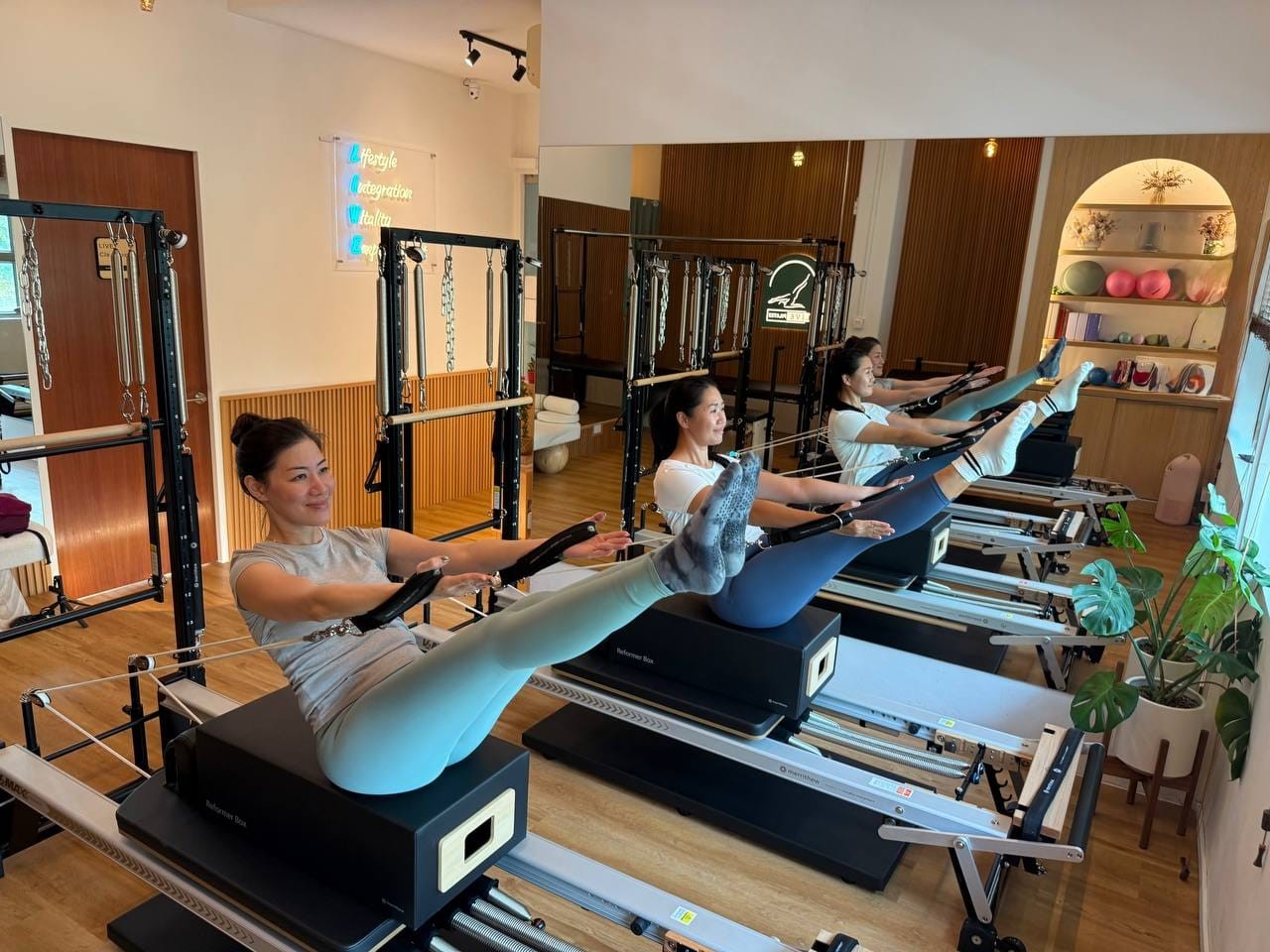
When people think about back pain, they often focus on the lower back. But underneath many spinal issues lies something more fundamental: spinal mobility. At LIVE Pilates, we don’t just strengthen the body — we help it move the way it was designed to move. And healthy movement of the spine is central to that process.
Understanding how your thoracic (mid-back) and lumbar (lower back) spine should move — and what happens when it doesn’t — can completely change how your body feels and performs.
What Is Spinal Mobility?
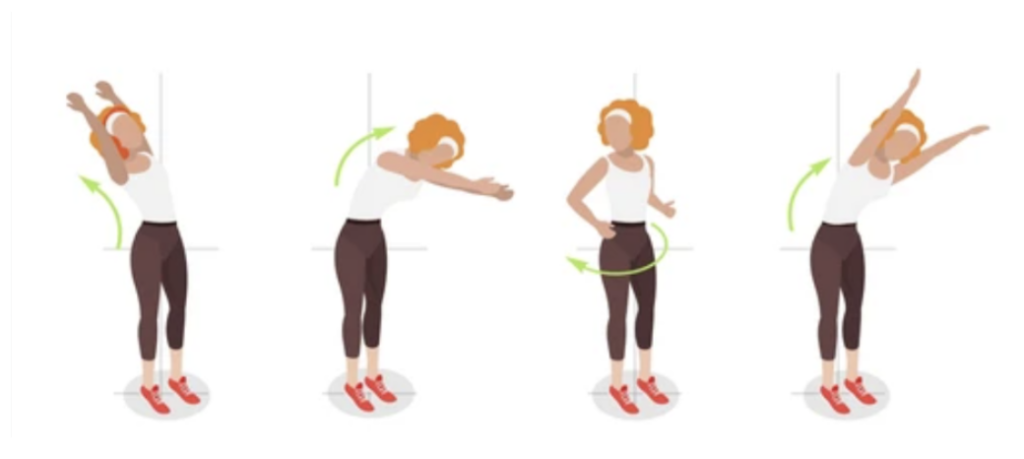
Spinal mobility refers to your spine’s ability to move freely and comfortably through its natural ranges of motion:
Extension (arching backward)
Flexion (bending forward)
Rotation (twisting)
Lateral flexion (side bending)
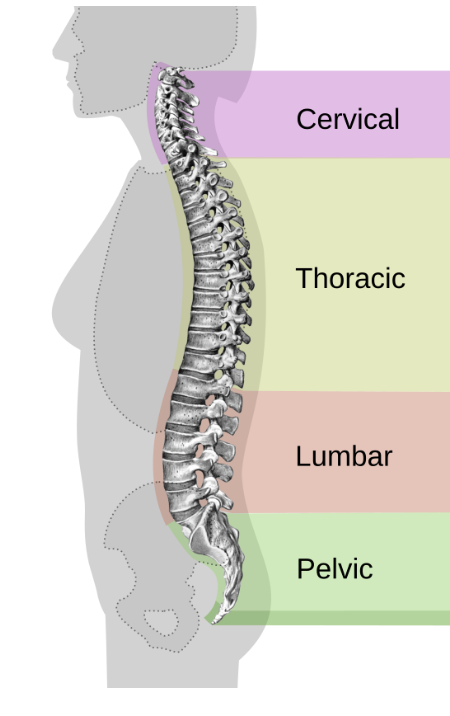
While the entire spine contributes to movement, each region has a primary role:
The thoracic spine (mid-back) is especially important for rotation and xtension.
The lumbar spine (lower back) is designed for stability with controlled flexion and extension, but only limited rotation.
A healthy spine distributes movement appropriately across these regions. When one area becomes stiff, another area often compensates.
Why Spinal Mobility Declines
Just like the neck, the spine follows the “use it or lose it” principle. Modern lifestyle habits make it very easy for spinal mobility to decline:
Prolonged sitting
Rounded posture over desks and phones
Limited rotational activities
Repetitive forward bending
Lack of extension (we rarely move backward in daily life)
Common Spinal Mobility Issues (and Their Impact)
Over time, the thoracic spine becomes stiff and rounded (kyphotic), while the lumbar spine may become overworked trying to compensate.
At LIVE Pilates, we frequently see clients who feel “tight” in their backs or experience recurring lower back discomfort. Often, the issue isn’t weakness alone — it’s restricted mobility in the wrong areas.
Some common patterns include:
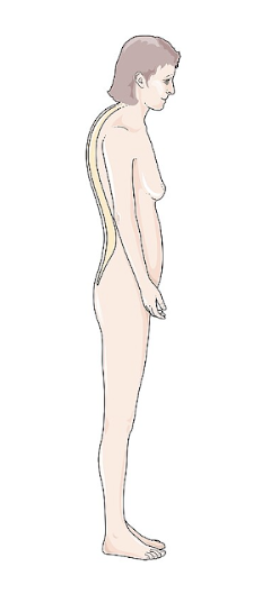
Rounded Upper Back (Thoracic Kyphosis)
Excessive rounding in the mid-back limits extension and rotation. This posture often develops from long hours sitting or looking down at devices.
When the thoracic spine stiffens into flexion:
The shoulders round forward
The head shifts forward
The lower back may overextend to compensate
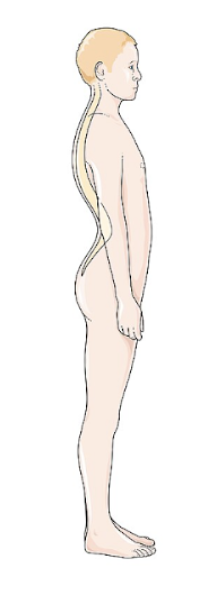
Excessive Lower Back Arch (Lumbar Lordosis)
Excessive arching in the lower back increases compression in the lumbar spine and limits the body’s ability to distribute load efficiently.
This posture often develops from prolonged standing with the pelvis tipped forward, certain strength-training patterns, or habitual postures that overemphasize extension.
When the lumbar spine rests in too much extension:
The pelvis may tilt forward
The ribs may flare upward
The abdominal muscles lengthen and weaken
The glutes may become underactive
The lower back absorbs more stress than it should
Lack of Spinal Rotation (One Side or Both)
The thoracic spine is built for rotation. When rotation is limited:
The lumbar spine may twist more than it should
Hips and knees may absorb unwanted rotational forces
Everyday movements like reaching behind you feel restricted
Many clients are surprised to discover they rotate much better to one side than the other.
Limited Flexion or Extension in the Mid-Back
When the thoracic spine cannot flex or extend well:
The lumbar spine often becomes overly mobile
The lower back absorbs stress it wasn’t designed to handle
Core engagement becomes inefficient
This imbalance is one of the most common contributors to recurring lower back discomfort.
What Happens When Spinal Mobility Is Limited?
Spinal stiffness rarely stays isolated. When one segment stops moving well, other parts of the body compensate.
Limited spinal mobility can lead to:
Poor posture and inefficient alignment
Compensatory movement in the shoulders and hips
Increased strain in the lower back
Higher risk of disc irritation
Back pain and muscular fatigue
A dysfunctional or underperforming core
Reduced balance and coordination
Even simple daily activities — twisting to grab something, reaching overhead, bending to tie your shoes — can feel uncomfortable or unsafe when spinal mobility is compromised.
A stiff spine doesn’t just affect workouts. It affects everyday life.
Pilates exercises that Improves Spinal Mobility
Pilates is uniquely effective at restoring healthy spinal movement because it combines mobility, stability, control, and awareness.
Here are some exercises to move our spine in the 4 movement patterns — flexion, extension, lateral rotation and lateral flexion.
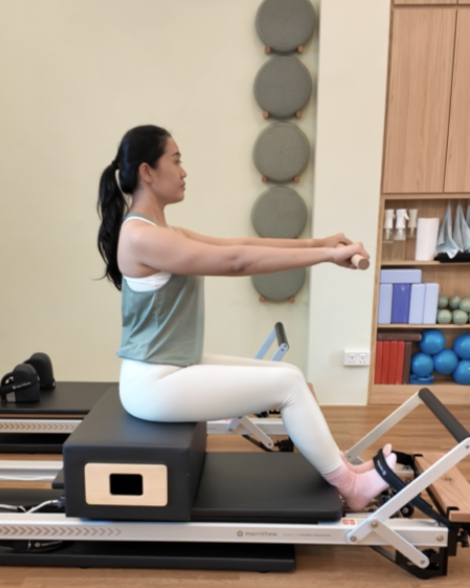
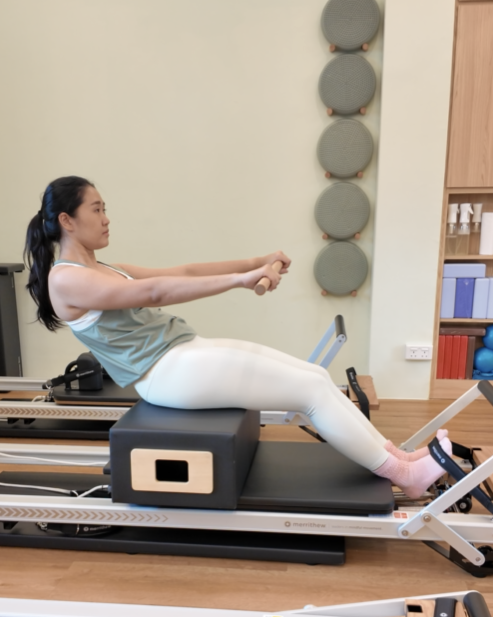
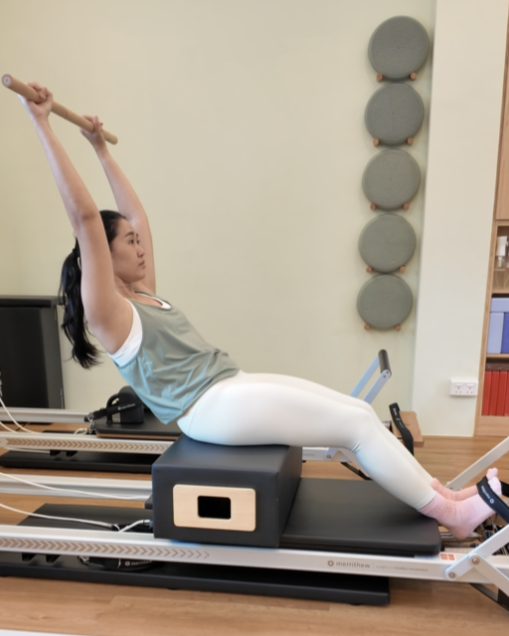
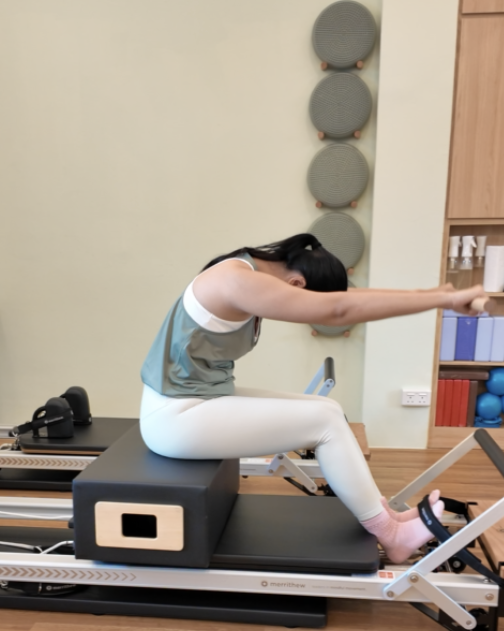
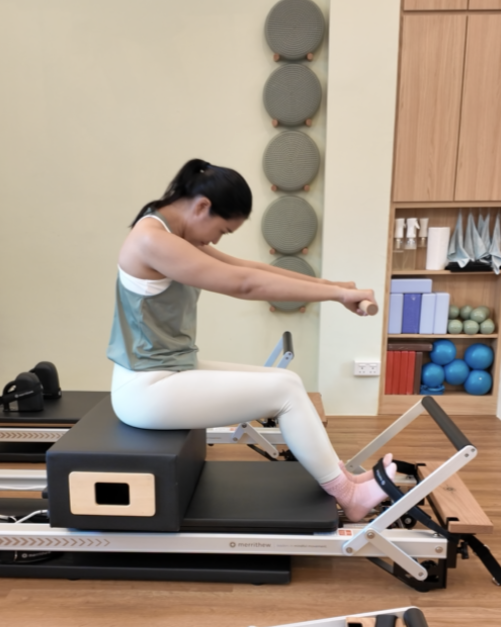
1. Round back improves mobility of the spine in flexion
Sit upright on the box with the pelvis and spine in neutral, feet secured under the strap.
Initiate the movement by gently rolling the hip bones away from the thighs, creating lumbar flexion through the abdominals rather than hinging backward. This encourages controlled mobility through the pelvis and lower spine.
Maintain the flexed position as the arms lift overhead, increasing the lever and challenging the abdominals to stabilize.
From here, deepen the flexion by folding forward over the legs, continuing to engage the abdominals to support the movement.
Finally, sequentially lengthen the spine from tail to head, returning back to start position with control — creating another opportunity to articulate and mobilize the entire spinal column.
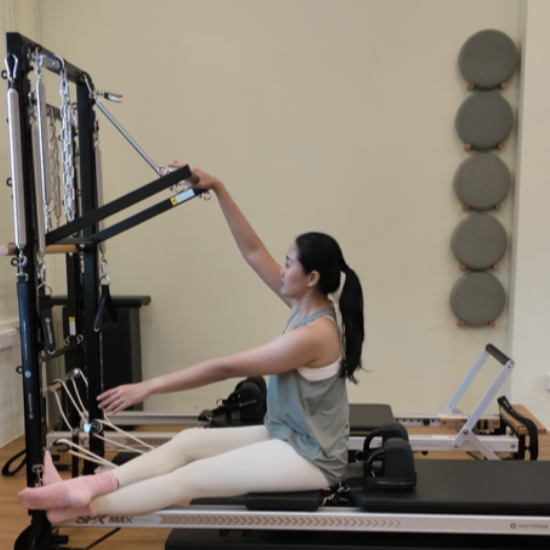
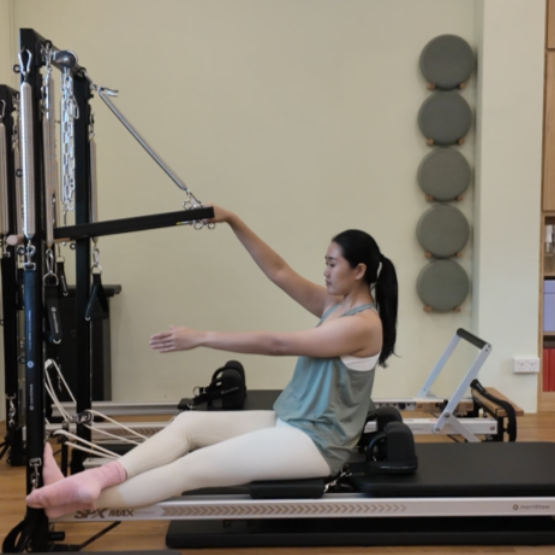
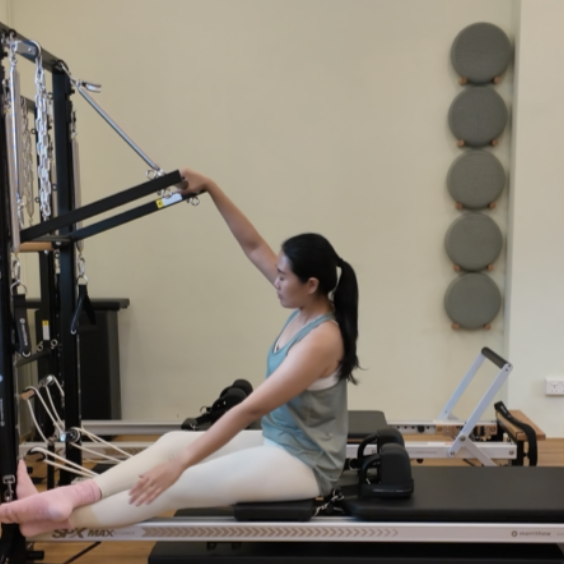
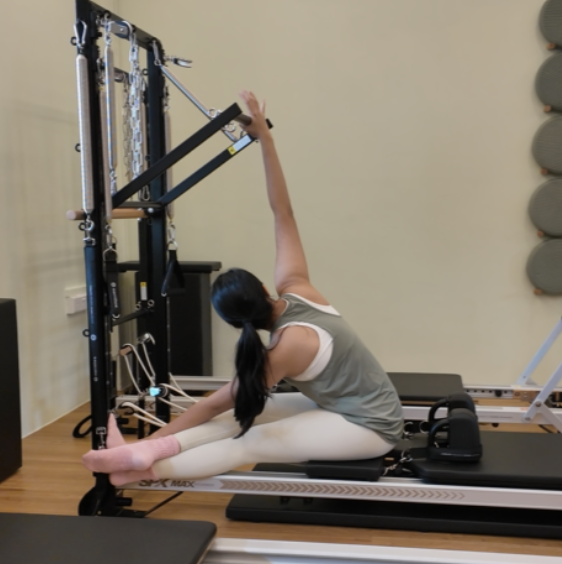
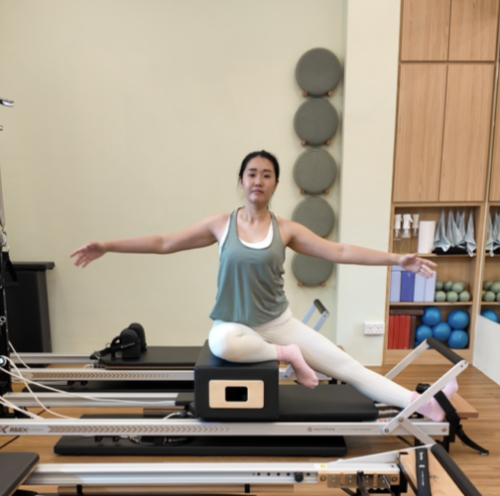
2. Seated push through Improves spinal Rotation
This is an excellent mobility exercise that encourages controlled spinal rotation while simultaneously stretching the hamstrings.
Start seated facing the Push-Through Bar, with one foot pressing against the vertical frame and the other leg stacked on top. The pelvis and spine begin in neutral. (Knees may bend slightly if the hamstrings are tight.)
Hold the Push-Through Bar with the hand opposite the feet that is pressing into the frame.
Initiate the movement by rolling the hip bones away from the front of the thighs, shifting the weight just behind the sit bones. Avoid intentionally rounding the mid and upper back, allow the movement to begin in the pelvis and lumbar spine, letting the rest of the spine naturally follow.
Keeping the spine lifted at the same height, rotate the torso toward the side of the feet against the frame. This creates a controlled rotational stretch through the lumbar spine into the mid-back.
Derotate the spine and lengthen back to the starting position.
Next, rotate in the opposite direction while hinging slightly forward and straightening the arm on the Push-Through Bar toward the ceiling.
Reach the free hand toward the feet to gently assist the rotation, deepening the stretch through the mid and upper back.
This movement primarily targets spinal rotation through the thoracic region, while also providing a stretch through the hamstrings.
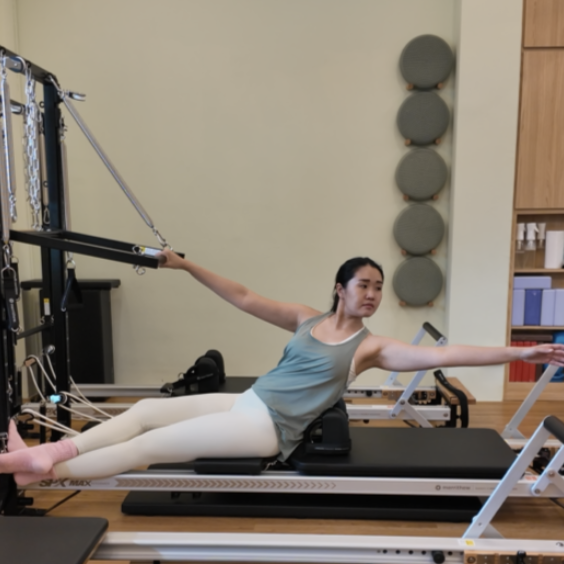
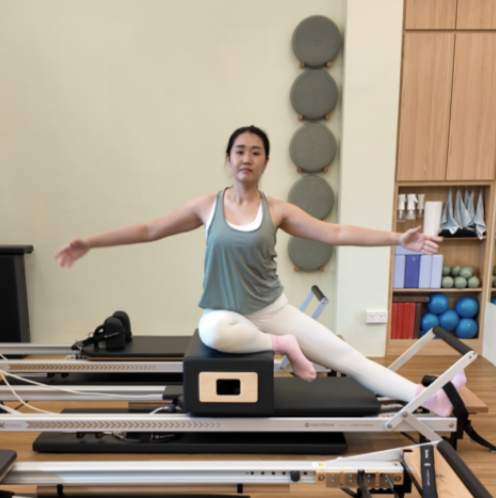
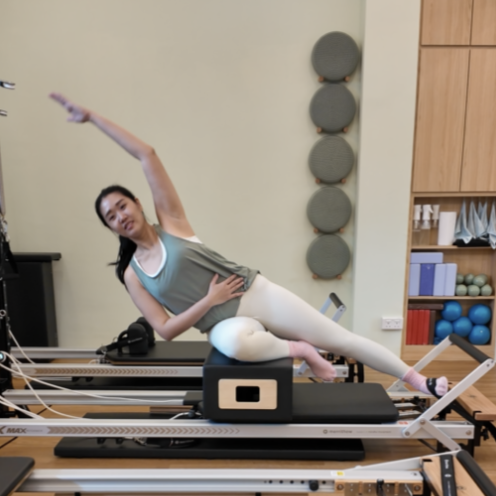
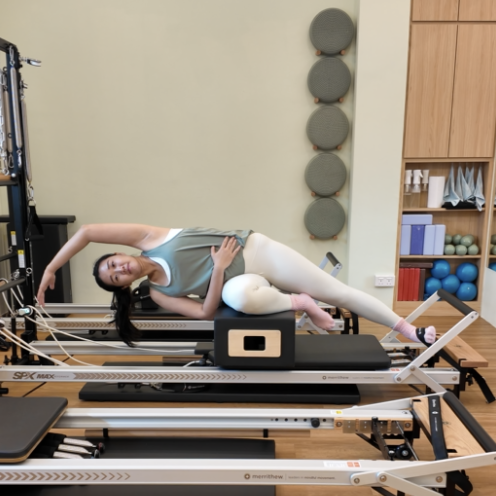
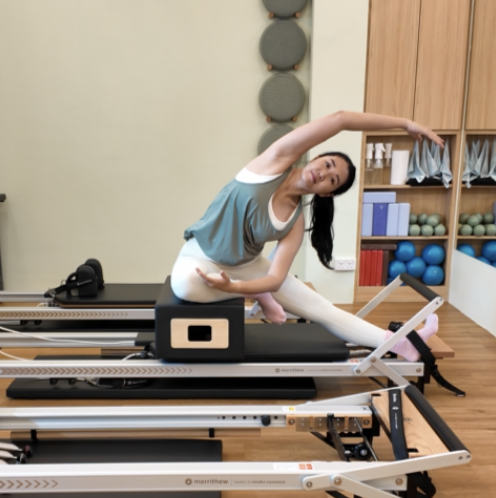
3. Mermaid shortbox to work on that lateral flexion
The Mermaid Short Box is an excellent and challenging exercise that strengthens the obliques while mobilizing the spine in lateral flexion.
Start seated on a short box with the pelvis and spine in neutral. The leg nearest the footbar is turned out, feet hooked under the footstrap. The other knee and hip are bent and turned out, seated comfortably on the box. Arms extend straight out to the sides.
Begin by leaning away from the footbar, keeping both sides of the body equally long to create a diagonal line from foot to head. The hip nearest the footbar lifts slightly and medially rotates. The obliques are engaged to maintain stability through the pelvis and spine.
Maintain a stable pelvis as you laterally flex the spine toward the floor. The obliques work eccentrically to control the movement, while gravity assists in mobilizing the spine through lateral flexion.
Sequentially lengthen from tail to head to return to vertical. Plant the hip nearest the footbar and rotate the leg back to the starting position.
Laterally flex toward the footbar, bending to the opposite side. This allows the spine to mobilize in the other direction, creating balanced lateral flexibility.
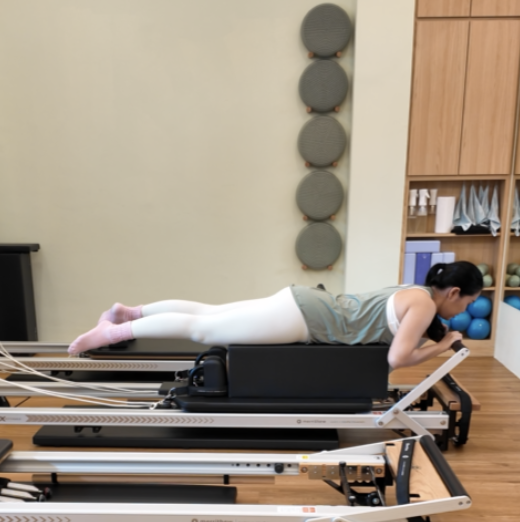
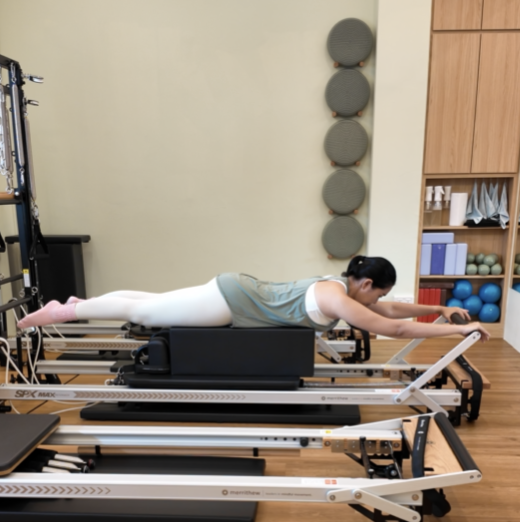
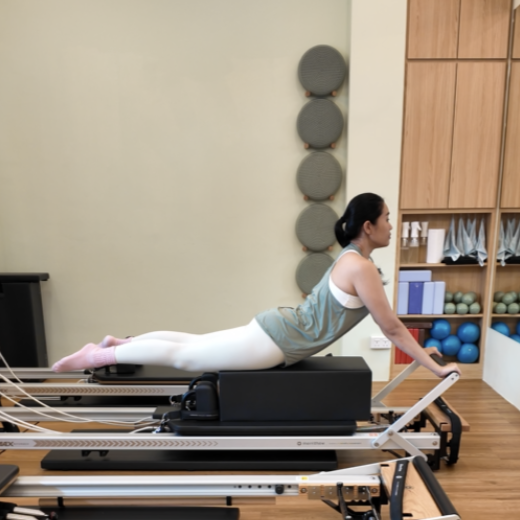
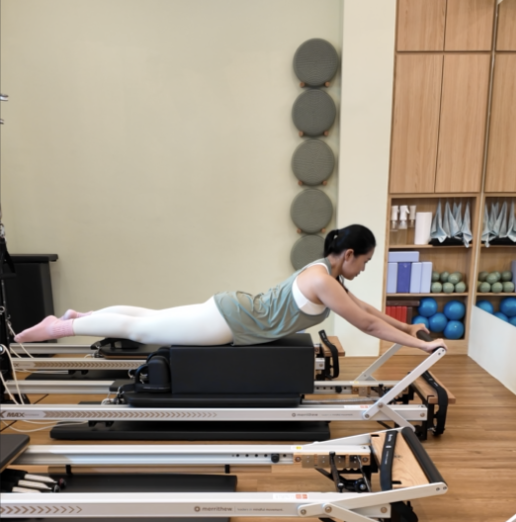
4. Baby swan prone on long box for extension
This exercise is excellent for mobilizing the spine in extension while reinforcing control throughout the movement.
Start by lying face down on the long box, with the upper body and head extending forward off the footbar end. Keep the pelvis neutral and legs straight and together. Hands hold the footbar in the lower (position #3) setting.
Even in this starting position, the mid-back muscles are already working against gravity. For clients with weaker mid-backs or thoracic kyphosis, simply holding this position can be sufficiently challenging.
Maintain the body position as you straighten the arms and press the carriage out. .
Keep the shoulder blades stabilized while drawing the carriage back in by pressing the arms down. Engage the abdominals to maintain even extension through the spine from head to tail, avoiding collapse into the lumbar spine.
Allow the body to lower and the carriage to press out again before bending the elbows to return to the starting position.
5. Segmental Articulation of the spine
Being able to articulate the flexion an extension of the spine from head to tail, or tail to head, one vertebrate at a time, instead of moving the whole block of spine at one time.
Working with a trained Pilates instructor allows you to:
Identify where you are stiff vs. overly mobile
Mobilize safely without aggravating symptoms
Build deep core support
Improve posture habits
Reduce compensatory strain
At LIVE Pilates, our approach is alignment-focused, controlled, and tailored to each individual — especially for clients managing back discomfort or postural issues.
Ready to Move with Greater Freedom?
Your spine is designed to move — not remain rigid.
Healthy spinal mobility allows you to twist, bend, reach, and extend with confidence. It supports better posture, stronger core function, and reduced strain throughout the body.
Whether you’re experiencing stiffness, recurring lower back tension, or simply want to move better, Pilates offers a safe and sustainable solution.
Book a session with us at LIVE Pilates and experience what a mobile, supported spine truly feels like. Your back will thank you.