How Pilates Improves Neck Mobility (and Why It Matters)

When people think of neck issues, they often think of stiffness, tension, or headaches. But underneath all of that lies a key movement quality that many of us overlook: neck mobility. At LIVE Pilates, we help clients not only strengthen and align their bodies, but also move with ease—and the neck plays a crucial part in that process.

Understanding what neck mobility is, why it matters, and how Pilates helps you improve it can make a profound difference in how you feel every single day.

What Is Neck Mobility?

Neck mobility refers to the ability of your cervical spine to move freely and comfortably through:

  • Rotation (turning your head side to side)
  • Flexion and extension (nodding)
  • Lateral flexion (tilting your head to each shoulder)

A healthy neck should move smoothly in all these directions without strain, pinching, or compensation from the upper back or shoulders.

Why Neck Mobility Declines

Just like any part of the body, the neck follows the “use it or lose it” principle. Modern lifestyles often create the perfect storm for declining neck mobility:

  • Prolonged screen time (forward head posture)
  • Stress-related muscle tension
  • Sedentary habits
  • Poor sleep positions
  • Repetitive head-down activities (phones, laptops)

These patterns stiffen the cervical joints and overload the surrounding muscles. Without intervention, mobility becomes more restricted—and discomfort more frequent.

Common Neck Mobility Issues (and Their Impact)

At LIVE Pilates, we frequently work with clients who come in feeling “tight” or “stuck” in their necks without always knowing why. Some of the most common issues we see include:

  • Tight upper traps, levator scapulae, and chest muscles
    These muscles often become overactive from stress, long hours at a desk, or poor posture, pulling the head forward and limiting comfortable movement.
  • Weak deep neck flexors
    These small but essential stabilizing muscles often switch off when larger muscles take over, making it harder to maintain proper alignment.
  • Forward head posture
    A modern-day posture pattern that puts extra load on the cervical spine and reduces the neck’s natural range of motion.
  • Limited rotation, side-bending, or nodding range
    Difficulty turning the head or tilting it comfortably is a clear sign that the cervical joints aren’t moving as freely as they should.
  • Neck tension linked to stress or inefficient breathing
    Many clients “hold” tension in their neck and upper chest, tightening these areas without realizing it.

These issues rarely stay isolated to the neck. Reduced cervical mobility can trigger a cascade of compensations throughout the body, and can lead to:

  • Headaches and shoulder or upper-back discomfort
    When the neck can’t move properly, surrounding muscles work overtime and become fatigued.
  • Poor posture and spinal misalignment
    A stiff neck often pulls the rest of the spine out of alignment, affecting how the whole body moves.
  • Restricted or shallow breathing
    Tight neck and chest muscles can interfere with natural rib expansion and diaphragmatic breathing.
  • Reduced shoulder and upper-back mobility
    The shoulder girdle relies on healthy neck and upper-spine movement to function optimally.
  • Difficulty with overhead or rotational movements
    Everyday tasks—like checking your blind spot or reaching overhead—can become challenging or uncomfortable.
  • Compensatory patterns throughout the spine and rib cage
    When the neck can’t rotate or bend well, the upper or lumbar spine often tries to “help,” leading to strain elsewhere.

In short, when neck mobility becomes restricted, the ripple effects show up throughout the entire upper body—often long before the neck itself feels stiff.

How Pilates Helps Improve Neck Mobility

Pilates is uniquely effective for improving neck mobility because it focuses on alignment, control, stability, and mindful movement—all essential for a healthy cervical spine.

Here’s how Pilates makes a difference:

1. Restores Proper Alignment

Pilates teaches neutral head and spine placement. By realigning the head over the shoulders and ribs, you reduce strain on the neck joints and allow freer movement. Many clients discover they’ve been “carrying” their head too far forward—once corrected, mobility improves dramatically.

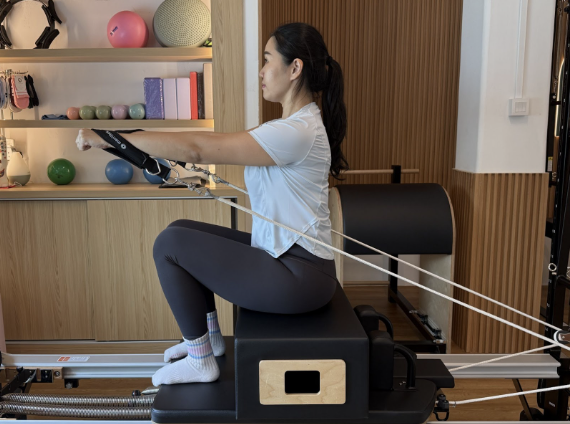
This can be demonstrated in many sitting exercises.

During seated arm work like Font-rowing, poor head alignment is evident when the head protrudes forward past the shoulders, causing neck extension. As a result, the shoulders become tense and elevated, and weight shifts behind the sit bones.

Proper sitting alignment occurs when the head is balanced over the shoulders, the pelvis and spine remain neutral, and the rib cage stacks directly beneath the head. This alignment engages the erector spinae muscles, creating a long, lifted spine.

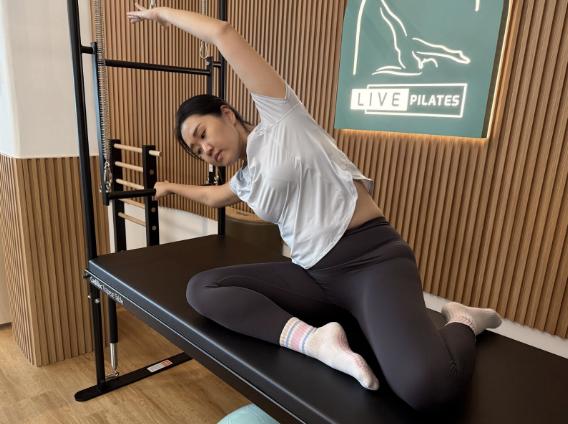
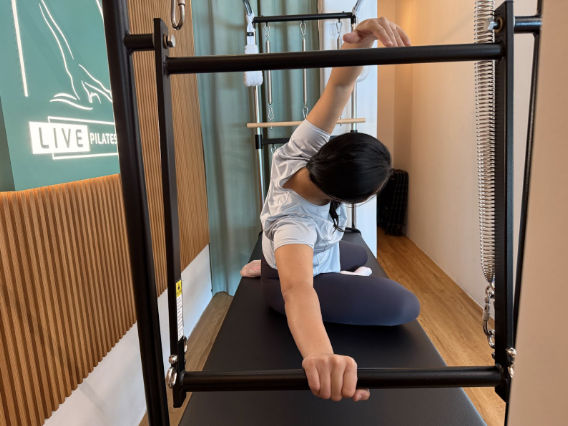
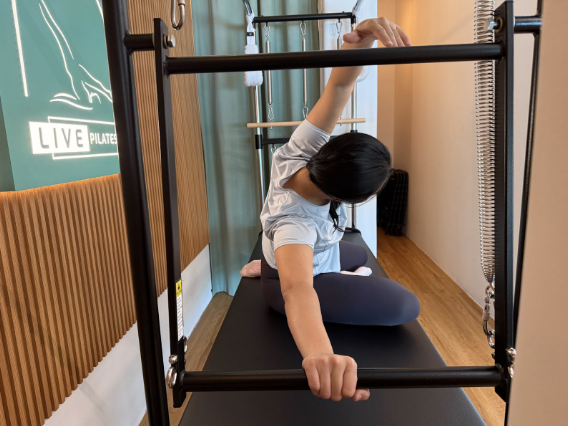
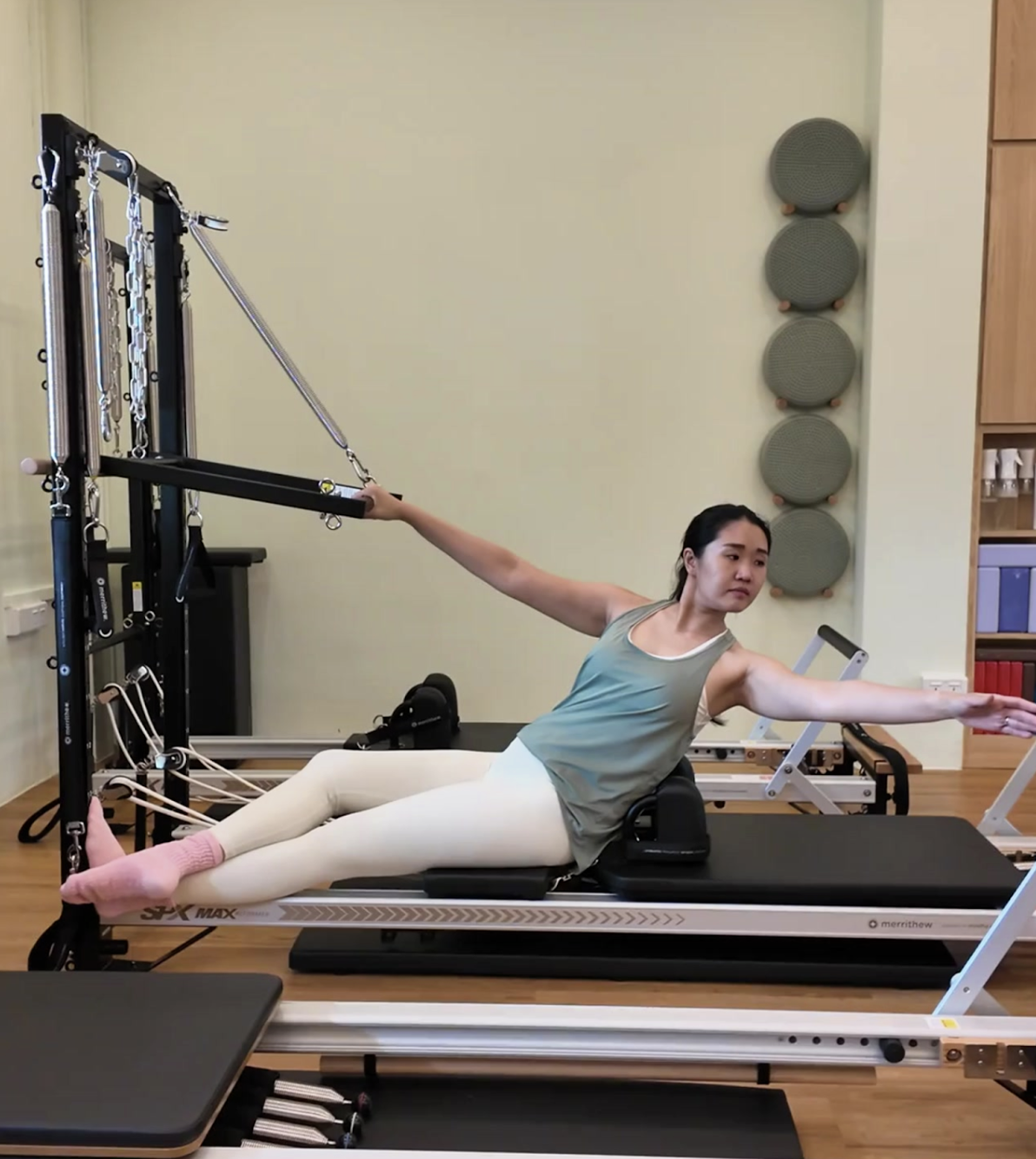
Another common instance of neck misalignment occurs during side bending of the spine.

In these photos, the head sits forward of the shoulders and rib cage, which can create tension in the neck. This forward position also results in rounding through the upper back, making it harder to sit tall and relaxed.

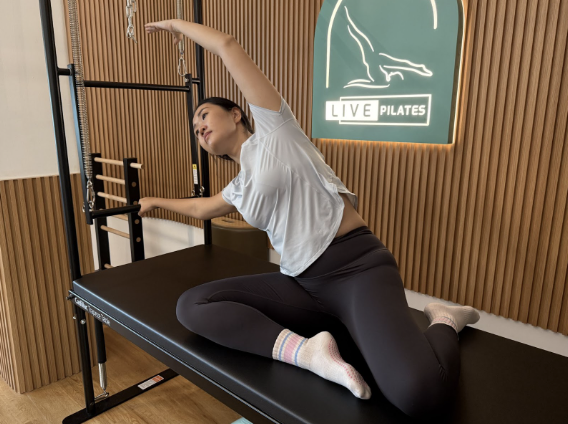
Here, the head has been repositioned directly over the ribcage, with the ears aligned with
the shoulders and arms.

2. Strengthens Deep Neck Flexors and Extensors 

Many people unknowingly rely on the wrong muscles to hold their head up. Pilates helps strengthen the deep neck flexors and extensors—the key postural muscles responsible for stabilizing and supporting the cervical spine—while reducing overuse of larger, more superficial muscles like the Upper Trapezius.

This balance supports smoother, safer movement. 

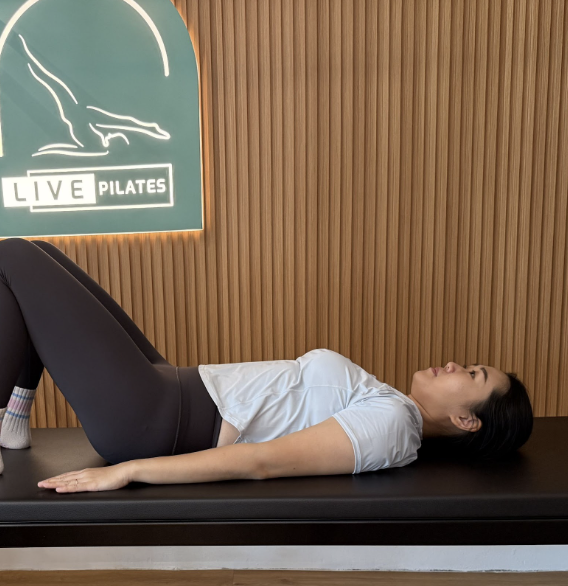
One example of strengthening the deep neck flexors is the Ab prep which is commonly incorporated into many dynamic Pilates movements. 

Start in a supine position, lying on your back with your arms long by your side, pelvis and spine in neutral and knees bent comfortably. 

Put pads under the head to reduce tension in the neck (if any). 

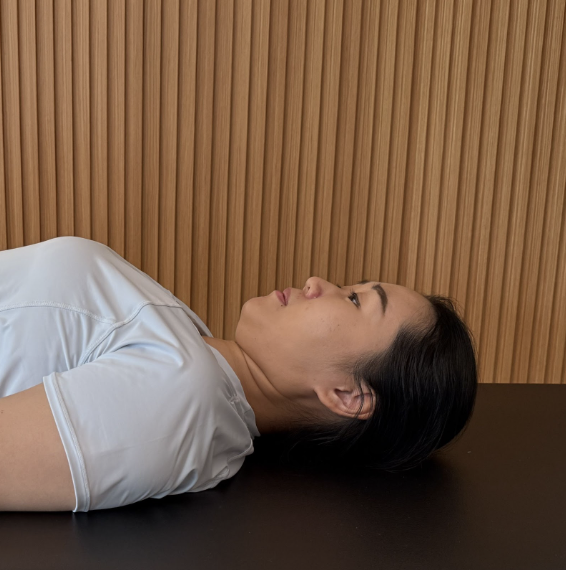
Start with a craniovertebral flexion, commonly known as a “Head nod”, which involves flexion of the first two cervical vertebrae.

This is a small, subtle movement: gently glide your eyeline downward while lengthening the back of the neck. This helps stabilize the neck before progressing to the next step.

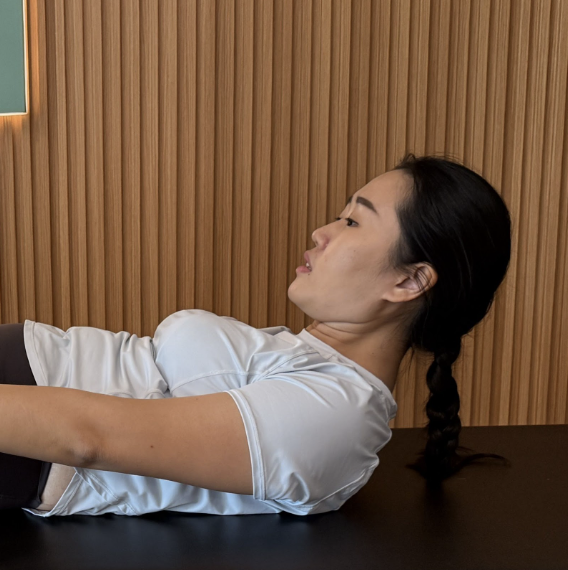
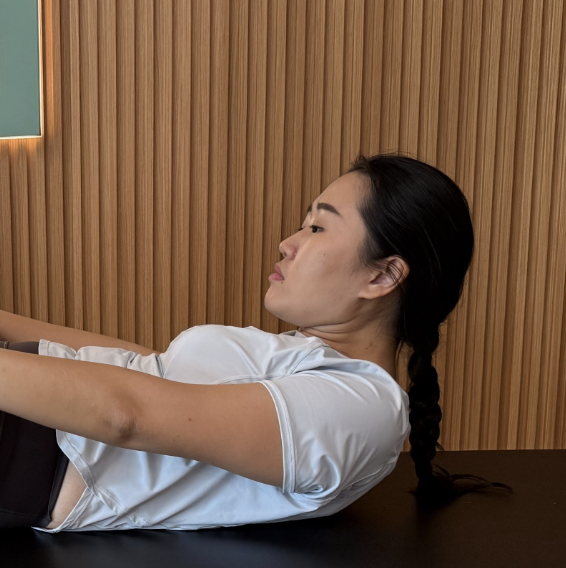
Next, perform an “Ab prep” by contracting the abdominal muscles to lift the upper back off the mat. The deep neck flexors remain engaged, while the head stays in proper alignment so the neck line continues smoothly from the upper back in one long line.

If the movement is initiated by craning the neck forward, it will look like this as shown in the photograph where the neck is overly flexed forward.

This is because the neck flexors are working over time to compensate for weak abdominals. Hence it is important to strengthen our core muscles as well.

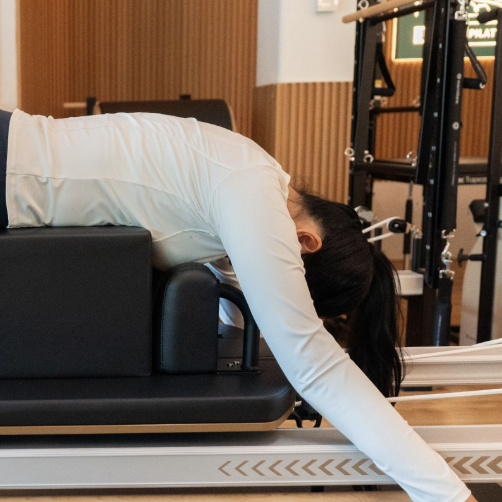
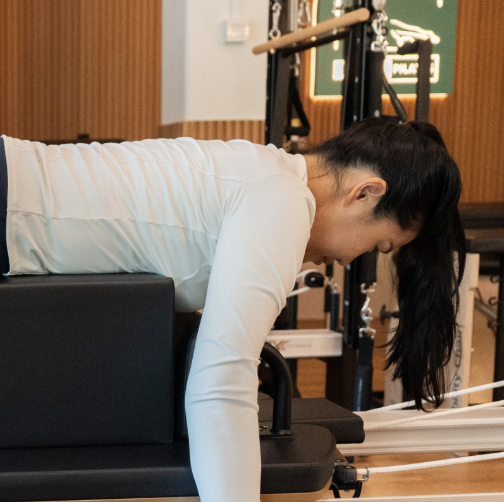
In this classic “arms pulling straps” performed in “prone” position, we start with the spine rounded over a raised platform. This allows the neck extensors, shoulders, and back muscles to fully relax.

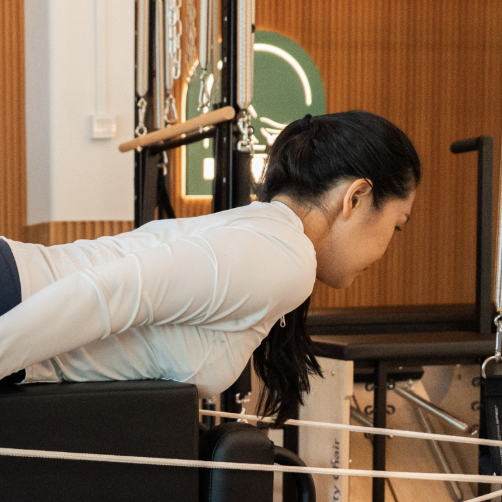
Pull the shoulders down and back to stabilize the shoulder blades, then lift the head and upper back so they are parallel to the floor.

This gently engages the neck extensors and upper back muscles, ideal for clients with forward head posture and rounded upper back.

To further challenge the neck and upper back extensors, lift the head and upper back higher within your natural range of motion.

Ensure the neckline continues smoothly from the upper back in one long line, avoiding excessive extension.

3. Enhances Whole-Spine Mobility

The neck never moves in isolation. Stiffness in the upper back (thoracic spine) often forces the neck to overwork. Pilates promotes full-spine mobility—helping the upper back rotate, flex, and extend more effectively, which frees up the neck.

See our article on Spinal mobility 


4. Improves Breathing Mechanics

Shallow or chest-dominant breathing tightens the neck and upper-back muscles. Pilates encourages diaphragmatic breathing, reducing unnecessary tension in the neck and promoting relaxation and ease of movement.


5. Builds Stability in the Shoulders and Upper Back

Poor shoulder and scapular control often creates neck tension. Pilates strengthens the muscles around the shoulder blades, promoting better support for the neck and reducing compensatory strain.

See our article on Shoulder mobility here 


6. Encourages Mindful, Controlled Movement

Pilates requires presence, precision, and awareness—qualities that help you move your neck intentionally rather than habitually. Many clients discover they’ve been gripping their neck muscles even when they don’t need them.

Learning to relax is just as important as learning to move.


Long-Term Improvements Come from Consistency

Neck mobility doesn’t change overnight. Stiffness often builds gradually over months or years, and it takes mindful, progressive training to restore healthy movement. Working with a trained Pilates instructor can help you:

  • Identify compensations
  • Strengthen safely
  • Improve postural habits
  • Mobilize without aggravating symptoms
  • Build long-term resilience

At LIVE Pilates, we take a personalized, gentle, and alignment-focused approach to neck mobility—especially for clients dealing with tension, stress, or neck pain.


Ready to Move Freely Again?

Healthy neck mobility affects everything from your posture to your breathing to your ability to move without pain. Pilates offers a safe, smart, and sustainable way to restore that freedom of movement.

Whether you’re recovering from stiffness, dealing with headaches, or simply wanting to move better, our classes and private sessions can support your path to a more mobile, balanced body.

Book a session today or drop by the studio to learn more. Your neck (and your whole body) will thank you.

Leave a Reply

Your email address will not be published. Required fields are marked *